Introduction
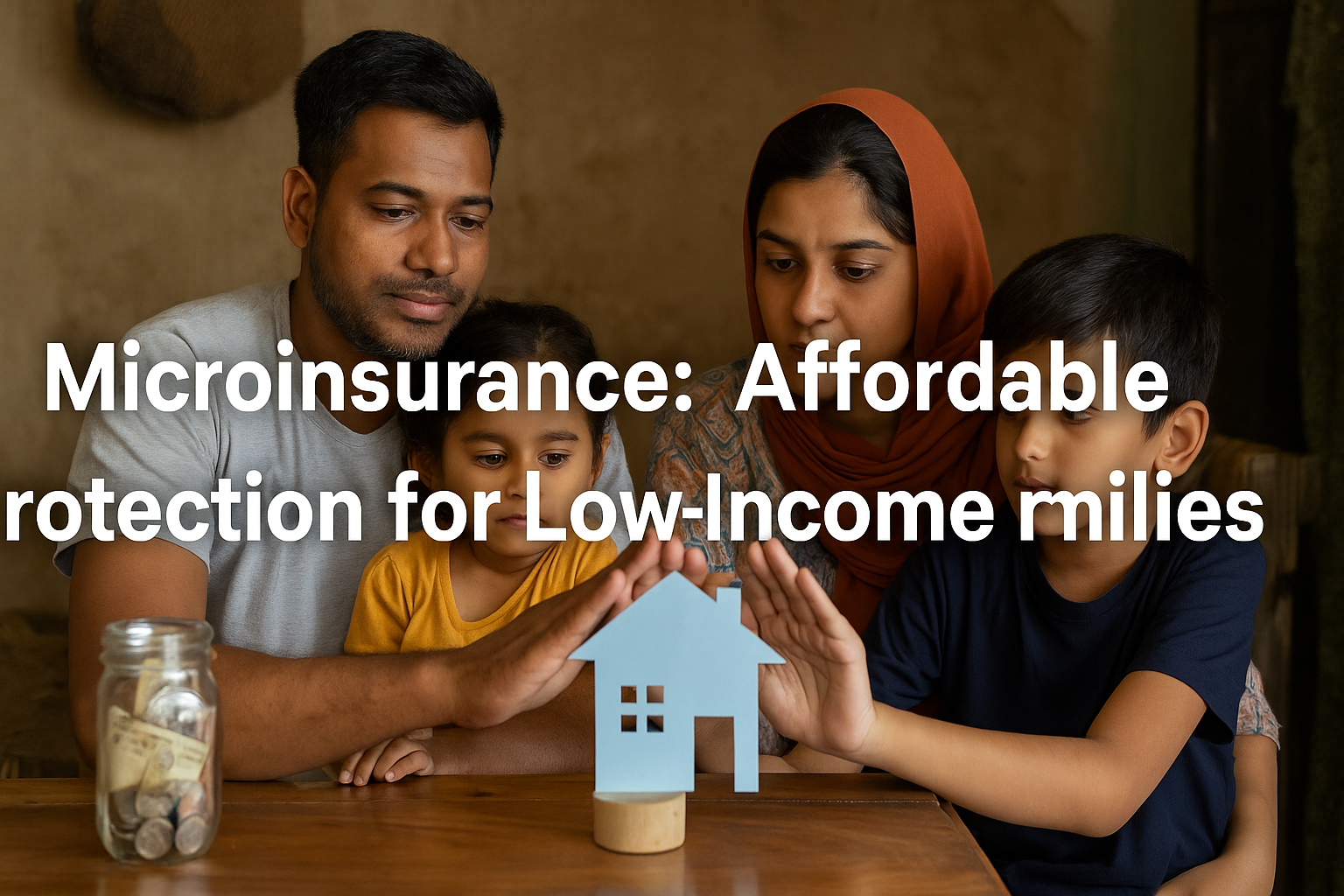
In a world where financial uncertainty affects millions, microinsurance has emerged as a powerful tool to protect low-income families from life’s unexpected challenges. Traditional insurance often remains out of reach due to high premiums, complex paperwork, and limited access. Microinsurance bridges that gap by offering affordable, simple, and accessible coverage for people in developing regions.
As of 2025, this sector is growing rapidly thanks to digital innovation, mobile payments, and public–private partnerships. Microinsurance is no longer a niche product—it’s a movement toward inclusive financial protection.
1. What Is Microinsurance?
Microinsurance refers to low-cost insurance products designed to protect low-income individuals against specific risks such as health emergencies, accidents, crop failure, or death of a family breadwinner.
Premiums are usually small and paid in flexible installments—sometimes even daily or weekly. These policies are often distributed through microfinance institutions, mobile operators, cooperatives, and NGOs, ensuring accessibility in both rural and urban communities.
2. The Purpose and Impact
The primary goal of microinsurance is financial resilience. When low-income families face medical expenses, natural disasters, or sudden income loss, they often fall deeper into poverty. Microinsurance helps break this cycle by providing quick financial relief during crises.
For example, a farmer in Myanmar or Kenya can recover from crop loss through a weather-indexed microinsurance plan, while a factory worker in India can access hospitalization benefits via mobile-based health coverage.
By cushioning families from financial shocks, microinsurance not only protects livelihoods but also encourages long-term economic growth.
3. The Role of Technology and Mobile Platforms
Technology is the backbone of modern microinsurance. Mobile phones have revolutionized the distribution and management of insurance policies in developing countries.
Through mobile platforms, individuals can now register, pay premiums, and file claims using simple text messages or apps. This reduces administrative costs and eliminates the need for physical branches.
InsurTech startups are leveraging AI, big data, and blockchain to assess risks and prevent fraud. For example, satellite imagery is being used to validate agricultural claims in real time, ensuring faster payouts to farmers.
4. Key Success Models Around the World
Several successful microinsurance programs have emerged globally:
-
BIMA (Asia & Africa): Offers mobile health and life insurance to millions of low-income users via telecom partnerships.
-
Pula (Africa): Provides crop insurance using satellite data and weather models.
-
MicroEnsure (South Asia): Delivers affordable coverage for health, life, and accidents via mobile banking systems.
These programs demonstrate that scalability and profitability can coexist with social impact when technology and local partnerships align.
5. Challenges Facing Microinsurance
Despite its promise, microinsurance faces several obstacles:
-
Awareness Gap: Many potential beneficiaries are unaware of how insurance works or why it’s valuable.
-
Trust Issues: In low-income communities, lack of transparency and delayed claim settlements can erode trust.
-
Regulatory Barriers: Some regions lack a supportive legal framework for microinsurance products.
To overcome these challenges, education campaigns, simplified policy terms, and digital transparency are essential.
6. Government and NGO Involvement
Governments and development agencies play a crucial role in promoting microinsurance. Subsidized premiums, tax incentives, and public–private collaborations encourage broader adoption.
Organizations like the World Bank, UNDP, and ILO actively support projects that integrate microinsurance into national social protection programs. These partnerships ensure that the poorest citizens are not left behind.
7. The Future of Microinsurance
As digital ecosystems mature, microinsurance is set to expand beyond traditional markets. Integration with mobile banking, digital ID systems, and AI-powered risk modeling will make policies even more personalized and efficient.
By 2030, experts predict that over one billion people could be covered under microinsurance schemes globally. This represents not just business growth—but progress toward global financial inclusion and equality.
Conclusion
Microinsurance is transforming the landscape of financial protection by bringing security to those who need it most. Its success lies in simplicity, affordability, and accessibility. With continued technological innovation and government support, microinsurance will remain a cornerstone of financial empowerment for low-income families worldwide.
The path ahead is clear: inclusive insurance is not charity—it’s smart, sustainable economics for a fairer world.
